Signs Your Home Needs to Be Repainted
The signs your home needs to be repainted are not always obvious from the driveway. A tired color, a peeling patch, or dark streaks could mean normal aging or real trouble. Some changes are harmless. Others mean the paint no longer protects the stucco, block, or wood underneath. That difference decides whether you face a small fix or a larger repair.
This guide sorts the most common signs by cause. It shows what each one looks like and how serious it is. It ends with how often Palm Beach County homes need repainting.
Which Signs Mean Your Home Needs to Be Repainted and Which Are Normal Aging
Functional failure means your home needs repainting, while cosmetic aging usually does not. Cosmetic aging changes how paint looks, but the film still blocks water and UV. Light fading, surface dirt, and a slight loss of sheen fit here. Functional failure means the film no longer protects the surface. Peeling, heavy chalking, open caulk, and wide cracks fit there.
This guide rates every sign on a three-level scale:
- Cosmetic: monitor it and plan ahead
- Early functional: repair the problem and plan the repaint soon
- Active failure: act soon
Palm Beach County homes show these signs earlier than homes in milder climates. Year-round UV, humidity, wind-driven rain, and salt air all wear on the film. If you cannot recall your last repaint, trust the signs over the calendar.
Signs of Sun Damage on Your Home’s Exterior
UV hits Palm Beach County homes year-round and breaks down both the binder and the pigment in paint. South and west-facing walls take the most exposure. Sun damage is the earliest warning, and it often starts as a cosmetic issue.
Chalking Means the Paint Binder Is Breaking Down
Chalking means UV has broken down the paint binder, so the film is losing strength. Rub your hand or a dark cloth across a sun-facing wall. A dull, powdery residue comes off, and rain can streak it onto walkways below.
Light chalking on an older paint job is cosmetic, so plan the repaint. Heavy chalking within a few years of a repaint points to the wrong product or poor preparation. Treat that as early functional. The binder is largely gone, so you need a full repaint soon, not a spot repair. Ignore it and the film keeps eroding toward the surface. New paint over a chalky wall will not bond and will peel early.
Fading Means UV Is Wearing Down the Pigment
Fading means UV is wearing down the pigment, and on its own it is cosmetic. The color looks washed out or uneven from wall to wall. Compare a sun-facing wall to paint under an eave or behind a light fixture to see how much has faded. Darker, more saturated colors fade fastest.
Fading alone calls for a full repaint on your timeline, not an emergency. Fading plus chalking is early functional, so move the repaint up. You cannot touch up faded areas. New paint will not match the faded paint around it, so fading is a whole-surface issue.
Signs of Moisture Damage on Your Home’s Exterior
Humidity, heavy rain, and salt air keep exterior surfaces under constant moisture pressure. When water gets behind the film, the bond fails, and that is why exterior paint fails so often here. These signs usually mean functional failure. Mildew is the exception, since it can stay cosmetic when it cleans off and stays off.
Peeling and Flaking Mean Water Is Getting Behind the Paint
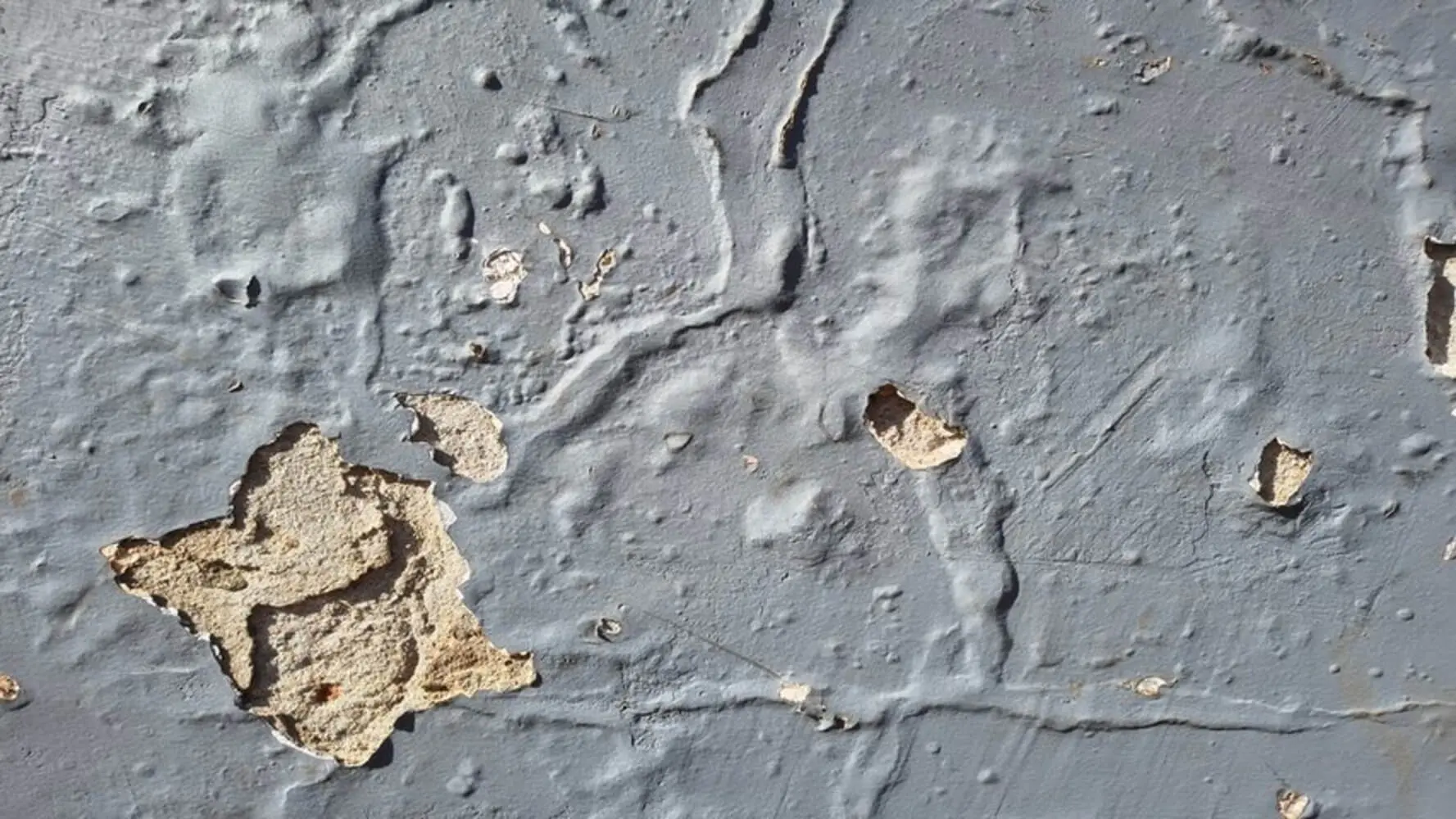
Peeling and flaking mean water is getting behind the paint, or the paint never bonded. Look for curls, chips, or sheets lifting at trim edges, sills, fascia, lower walls, and spots near gutters. Bare or chalky surface shows underneath.
A single patch near an obvious source, like a sprinkler hitting the wall, is early functional. Fix the source and repair the spot. Peeling across several walls, or peeling that keeps returning, is active failure. It needs a full repaint with scraping and priming. Exposed wood or stucco also counts as active failure. Peeling within a few years of a repaint often traces back to preparation. Check what a workmanship warranty covers before you pay for a fix.
Bubbling and Blistering Mean Moisture Is Trapped Under the Film
Bubbling and blistering mean moisture is trapped under the film and heat is pushing it outward. You will see raised domes from pinhead to coin size. They feel hollow or soft when you press gently, and broken blisters expose the layers beneath.
Sun-baked walls heat the trapped water until it lifts the paint. Common triggers include painting in direct sun, over a damp surface, or with a second coat applied too soon. A few blisters on one sun-facing wall are early functional, so check for a moisture source. Widespread blistering, or blisters clustered near windows and doors, is active failure. That points to a leak you must find first. Once blisters break, water gets in, and the spot tends to progress to peeling.
Mildew That Keeps Returning Means the Surface Stays Damp
Mildew that keeps returning means the surface stays damp or the paint’s mildew protection is spent. It shows up as dark gray, green, or black patches on shaded walls, under eaves, and behind landscaping.
Mildew forms irregular patches in damp, low-airflow spots and returns within weeks or months of a wash. Dirt usually sits as an even film instead. Persistent dampness, humidity, and poor airflow cause the problem, and the paint’s built-in resistance wears out over time. Mildew that cleans off and stays off is cosmetic. Mildew that keeps coming back is early functional, so repaint with a mildew-resistant coating after you address the cause. Mildew that has worked into wood or stucco is active failure.
Signs of Stucco and Caulk Failure on Your Home’s Exterior
These signs are not failures of the paint film. They are failures of the stucco, block, and sealants that the paint protects. Both stucco and block absorb moisture, and Palm Beach County’s wind-driven rain makes open joints and cracks costly. These signs most often mean water is already inside the wall, so the ratings run higher here. Repair them before repainting, or the new paint will fail along the same lines.
Wide Stucco Cracks Mean Water Is Reaching the Surface Underneath
Wide or growing stucco cracks mean water can reach the wall underneath, while hairline cracks are usually normal. A hairline crack is about the width of a credit card edge or thinner, and it is cosmetic. Monitor it and fix it at the next repaint.
Wider cracks, long cracks, spiderweb patterns, and stair-step cracks in block joints are early functional. They need repair before any paint goes on. Staining or bubbling paint beside a crack is active failure, because water is already getting in. Paint will not cover a crack. It fails along that line. If you suspect structural movement, call a stucco or structural professional, not a painter.
Cracked Caulk Means Water Has a Direct Path Inside
Cracked or missing caulk means water has a direct path behind the trim and into the wall. Look around windows, doors, trim, and joints for caulk that is dried out, cracked, pulling away, or gone. Sun and heat age caulk, and movement between materials stresses every joint.
A few open joints are early functional and simple to repair. Widespread failure, or open joints around windows and doors, is active failure. It usually means the whole exterior needs fresh sealing as part of repaint prep. Water behind trim rots wood and stains interior walls.
When to Repaint the Exterior of Your House in Palm Beach County
The signs tell you whether it is time. The schedule and the cost of waiting tell you how soon.
How Often Palm Beach County Homes Need Repainting
Most Palm Beach County exteriors need repainting every five to seven years. That is a shorter cycle than in milder climates. Four factors move your home toward either end:
- How thoroughly the last job was prepared
- How much sun the walls get, especially south and west
- How close the home sits to the coast and its salt air
- The surface type, such as stucco, block, or wood trim
Use the calendar and the signs together. A home at year five with several functional signs should not wait. A home at year seven with none can still plan ahead. Preparation largely decides where your home lands in the range, so choosing a painting contractor carefully matters.
Why Waiting Past the Signs Costs More
Waiting past the signs turns a repaint into repair plus repaint. A repaint caught early means cleaning, caulking, priming, and painting. After active failure, the crew must repair rotted trim and patch stucco first, and the surface often needs more priming. Acting at the cosmetic or early functional stage keeps the job a repaint. A walkthrough with professional exterior painters shows which signs are cosmetic and which are functional.
Catch the Signs Early and Repaint on Your Own Schedule
Functional signs mean act: peeling, blistering, recurring mildew, wide cracks, open caulk, and heavy chalking. Fading and light chalking mean monitor and plan. In Palm Beach County, protection loss moves quickly. Catching the signs early keeps the project a repaint. It also lets you choose the timing instead of reacting to a leak.
The dry season is underway, and contractors book out four to eight weeks. Scheduling now points to a December or January start, well inside the best painting window.
Match what you see on your home to the signs above. The next step is having someone look at it. We would be glad to walk your exterior and tell you which signs are cosmetic and which are functional. We can also explain what a repaint would involve. Schedule an estimate with Painter Guys to get started.