Why Exterior Paint Fails in Palm Beach County and How to Prevent It
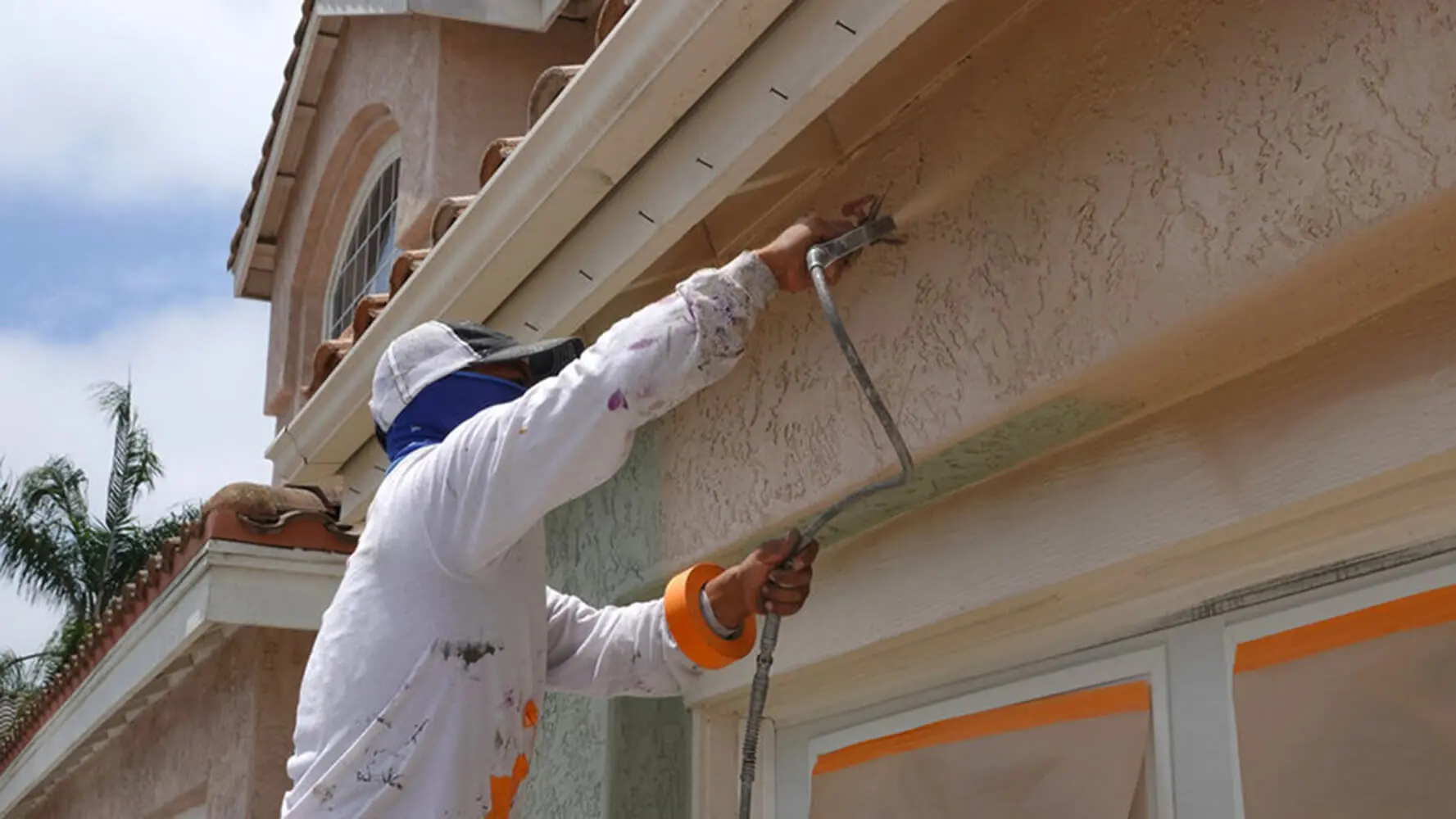
If your home’s exterior paint is peeling, bubbling, fading, or growing dark patches of mildew, you are not just dealing with a cosmetic problem. You are looking at a paint job that was not built to hold up against the conditions it was facing.
Paint failure in Palm Beach County is common. It is not inevitable. Most premature failures have a specific cause, and understanding that cause is the first step toward making sure the next paint job actually lasts. This guide breaks down why exterior paint fails in Palm Beach County’s climate, what drives each type of failure, and what prevents it.
What Makes Palm Beach County So Hard on Exterior Paint
Palm Beach County sits in one of the most demanding environments for exterior paint in the country. The combination of conditions here does not just wear paint down over time. It accelerates failure when the preparation or materials are not matched to what the climate actually demands.
The conditions working against exterior paint in this area include:
- Intense UV radiation year-round, with no meaningful seasonal relief
- High humidity that keeps moisture levels elevated even between rain events
- Salt air from coastal proximity that penetrates and degrades paint films
- Wind-driven rain during storm season that forces water into every unsealed gap
- Temperature cycling between hot days and cooler nights that causes surfaces to expand and contract repeatedly
A paint job that would hold up for eight to ten years in a drier or cooler climate can fail in two or three years here under the same conditions. The climate is not the problem on its own. It is the accelerant. When preparation or materials fall short, Palm Beach County’s environment makes sure the failure shows up fast.
How Moisture Causes Exterior Paint to Fail in Palm Beach County
Moisture is the primary driver behind the most visible exterior paint failures in Palm Beach County. Peeling and flaking, bubbling and blistering, and mildew growth are all moisture-driven failures, and they share the same root cause: water getting behind or beneath the paint film where it does not belong.
When moisture infiltrates a painted surface, the results depend on where it ends up and how the paint responds:
- Peeling and flaking occur when moisture breaks down the bond between the paint film and the surface beneath it. The paint lifts away in strips or chips, often starting at edges, seams, or anywhere the surface was not properly sealed.
- Bubbling and blistering occur when moisture trapped beneath the paint film turns to vapor under Palm Beach County’s intense heat and pushes against the paint from below, forming raised pockets or domes that eventually break open.
- Mildew growth appears as dark gray, green, or black patches on shaded surfaces or anywhere moisture collects and lingers in warm conditions. South Florida’s humidity and heat create near-ideal conditions for mildew to establish and spread.
The conditions that allow moisture to infiltrate in the first place follow a consistent pattern:
- Painting over a wet or damp surface that has not fully dried after rain or pressure washing
- Skipping primer on bare or repaired areas, leaving the surface porous and vulnerable
- Leaving gaps and cracks uncaulked so water has a direct path behind the paint film
- Applying a second coat before the first has fully cured, trapping moisture between layers
How UV Exposure Causes Exterior Paint to Fail in Palm Beach County
While moisture drives the most dramatic failures, UV radiation drives the ones that accumulate quietly over time. Chalking and fading are both UV-driven failures, and both are significantly accelerated by Palm Beach County’s year-round sun intensity.
Chalking is what happens when UV radiation breaks down the paint’s binder, the component that holds the pigment particles together and keeps the paint film intact. As the binder degrades, the surface develops a powdery, dusty residue that comes off on your hand when you run it across the wall. The paint looks dull and worn rather than peeled or lifted. Some chalking after many years is normal. Chalking within two or three years of a fresh paint job points to the wrong product for the conditions or a surface that was not properly prepared.
Fading is what happens when UV radiation breaks down the pigments themselves. Color loss is most visible on south and west-facing walls that absorb the most direct sun exposure throughout the day. Darker and more saturated colors are particularly vulnerable because they absorb more heat and UV energy than lighter ones. The paint film may still be physically intact while the color has shifted significantly from what was originally applied.
A paint that performs adequately in a northern climate can chalk or fade prematurely in South Florida’s UV conditions. Material selection is not just a quality consideration here. It is a climate consideration.
How to Prevent Exterior Paint Failure in Palm Beach County
Most exterior paint failures in Palm Beach County trace back to one of two things: inadequate preparation or the wrong materials for the conditions. Preventing failure means getting both right before a brush touches the wall.
Preparation is where prevention starts:
- Pressure wash the full exterior and allow surfaces to dry completely before any paint is applied
- Inspect and caulk all gaps, seams, and cracks so moisture has no path behind the paint film
- Scrape and remove any existing paint that is already failing or poorly bonded
- Prime all bare, repaired, or porous surfaces so the paint has a stable base to bond to
Application timing and conditions matter as well:
- Paint during the cooler parts of the day and avoid application in direct midday sun
- Do not apply paint during or immediately after rain when surface moisture is elevated
- Respect manufacturer-specified drying times between coats so moisture is not trapped between layers
Material selection is the third component:
- Exterior paints formulated with UV-resistant pigments and binders hold up significantly longer under Palm Beach County’s year-round sun intensity
- Mildew-resistant additives are a baseline requirement in this climate, not an upgrade
- A properly applied two-coat system provides the film depth needed to resist both UV breakdown and moisture infiltration over time
These are not steps a homeowner controls directly. They are the responsibility of the contractor doing the work. The quality of the preparation and the materials specified are what determine whether the paint lasts.
What This Means for Your Next Exterior Paint Project
The failures covered in this guide are not random. They are predictable outcomes when preparation is inadequate or materials are not matched to what Palm Beach County’s climate actually demands. Understanding the cause changes what to look for when evaluating who does the work.
Whether you are dealing with a paint job that failed too soon or planning ahead for a repaint, the right next step is the same: find a contractor whose process accounts for the conditions.
If you are ready to move forward, we would welcome the opportunity to show you how we approach exterior painting in Palm Beach County. Schedule an estimate with Painter Guys and see firsthand how our team prepares surfaces, selects materials for the local climate, and delivers results built to last.